October 9, 2026
How a Criminal Defense Lawyer in Lafayette LA Builds Defense Strategies
By @dominickrpmo676
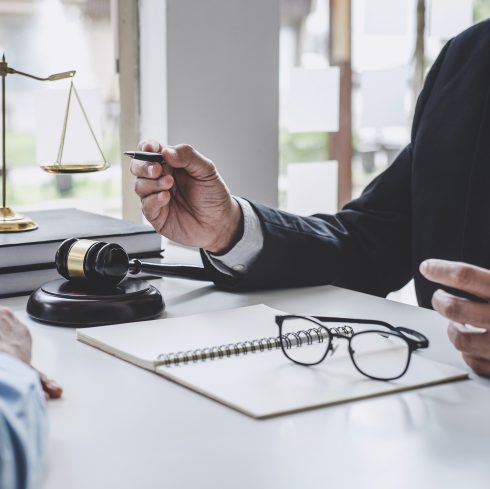


A criminal case rarely turns on a single dramatic moment. Most of the time, it is built, challenged, and reshaped through dozens of smaller decisions, each one carrying real consequences. A statement made too early can close off an avenue of defense. A body camera clip reviewed closely enough can expose a gap in the state's timeline. A witness who sounds confident on paper may fall apart under careful questioning. That is why defense strategy is never just about arguing innocence or asking for leniency. It is about method.
When people look for a criminal defense lawyer Lafayette LA, they often focus on the charge itself. They want to know whether the case is serious, whether jail is possible, whether a plea will be offered, or whether trial makes sense. Those are fair questions, but they come a little later than most people think. Before a lawyer can answer them responsibly, the lawyer has to understand how the case was made, where it is vulnerable, and what result actually serves the client best.
In practice, strong defense work starts with discipline. It is not chest-thumping. It is not television lawyering. It is a careful read of the facts, the law, the personalities involved, and the local realities of the courthouse.
A defense strategy starts before the first court date feels important
Many clients assume the real legal work begins in court. In truth, some of the most important strategy decisions happen much earlier, often in the first few days after an arrest or investigation becomes known.
That first meeting matters more than most people realize. A good defense lawyer is not simply collecting the client's version of events. The lawyer is identifying exposures, inconsistencies, deadlines, and collateral consequences. A misdemeanor DWI case carries one set of concerns. A felony drug allegation with a vehicle search raises another. A domestic violence charge may involve protective orders, firearm restrictions, and family court consequences running alongside the criminal case. Theft charges can affect professional licensing. College students face disciplinary proceedings in addition to prosecution. The strategy has to account for the entire landscape, not just the statute listed on the booking sheet.
This is where experience changes the quality of representation. Facts do not arrive in a clean sequence. Clients are stressed. They leave things out. Police reports often frame events in the light most favorable to the arrest. Witnesses may be angry, embarrassed, or motivated by family pressure. An experienced lawyer knows how to slow the case down and separate what can be proven from what is merely alleged.
The case file is only the state's version of the story
One of the first strategic tasks is to test the reliability of the official narrative. Police reports can sound complete and persuasive, especially to someone seeing criminal procedure for the first time. But reports are summaries, not neutral truth.
An officer may write that a defendant appeared nervous. That could mean almost anything. A report may say contraband was found "within reach" of a passenger in a vehicle occupied by several people. A witness may identify a suspect confidently in a report, but the lawyer will want to know how that identification happened. Was it a proper photo lineup, a suggestive show-up, or a chaotic roadside encounter at night? Those details matter because juries and judges care about reliability, and reliability often lives in the details.
A seasoned criminal defense lawyer Lafayette LA will usually look beyond the written report as fast as possible. That means requesting and reviewing body camera footage, dash cam video, dispatch logs, lab records, jail calls when relevant, photos of the scene, medical records where they help, and prior statements by key witnesses. Sometimes the strategy changes entirely once that material arrives.
I have seen cases in which a report described a suspect as resisting, but the body camera showed confusion rather than aggression. I have seen search cases that looked airtight until the timing in the dispatch log suggested the stop had been extended longer than the law allows. I have seen witness statements evolve in ways that made perfect sense emotionally, but looked far less stable under evidentiary scrutiny.
Local knowledge is not a shortcut, it is part of the work
Defense strategy in Lafayette does not happen in a vacuum. The local bench, prosecutors, law enforcement agencies, and courthouse routines all shape how a case should be approached.
That does not mean outcomes are predetermined. It means smart lawyers understand the practical environment. Some prosecutors are more willing to discuss diversion in first-offense cases with strong mitigation. Some judges expect certain motions to be thoroughly briefed before a hearing. Some types of evidence are routinely contested because local agencies use recurring procedures that deserve scrutiny. Lawyers who practice regularly in the area learn where the friction points tend to be.
This matters because criminal defense is not simply a theoretical exercise in constitutional law. It is applied judgment. A technically valid argument that is poorly timed may accomplish little. A strong mitigation package submitted early might prevent a weak case from hardening into a harsher prosecution posture. Knowing when to press, when to wait, and when to narrow the issue can make a substantial difference.
Every useful defense theory has to survive contact with the evidence
Clients often come in wanting the lawyer to "fight everything." That reaction is understandable, especially when someone feels wrongly accused or overwhelmed by the process. But broad resistance is not the same as effective strategy. Good defense work is selective and grounded.
Sometimes the best path is factual innocence. Sometimes it is mistaken identity. Sometimes it is self-defense. Sometimes it is lack of possession, lack of intent, an illegal search, an unreliable witness, weak forensic proof, or overcharging by the state. In other cases, the core facts are largely true, but the strategy focuses on reducing exposure, limiting admissible evidence, avoiding a felony conviction, or building the strongest sentencing presentation possible.
What separates a real defense strategy from wishful thinking is whether it fits the evidence that can actually come into court. A lawyer may suspect a witness is exaggerating, but suspicion alone is not enough. There must be a way to expose that weakness through documents, prior statements, objective video, physical evidence, or careful cross-examination. A client may insist police planted evidence, but if there is no support for that claim, centering the defense on it may damage credibility with the court and make negotiation harder.
That is one of the more difficult parts of representation. A lawyer must be an advocate without becoming a mirror. Clients need honesty, not flattery. The strongest attorneys are able to say, in clear terms, "Here is what helps us, here is what hurts us, and here is what I think a judge or jury is likely to do with it."
Search and seizure issues often shape the whole case
In many criminal matters, especially drug, firearm, and vehicle stop cases, the defense turns on how police obtained the evidence. If the stop, search, detention, or interrogation violated constitutional limits, the defense may seek to suppress the evidence or statements that followed.
This area sounds straightforward from the outside. People talk about "illegal search" as if it were obvious. In reality, suppression litigation is highly fact-sensitive. The details matter: where the person was standing, whether consent was requested or implied, how long the stop lasted, whether an arrest had legal cause, whether plain-view doctrine applies, whether a vehicle exception was triggered, and whether the state's witnesses tell a consistent story at the motion hearing.
A good defense lawyer does not treat these motions as routine paperwork. They build them from the record. If body camera audio captures uncertainty among officers, that may matter. If the report says one thing and the video timeline suggests another, that may matter even more. If the state cannot establish a proper chain of custody, that issue may not suppress the stop itself, but it can still weaken confidence in the proof.
Not every motion to suppress succeeds. Many do not. But Criminal defense lawyer Lafayette LA even when the motion is denied, the hearing can reveal useful testimony, lock officers into a version of events, and expose themes for trial or negotiation.
Witness credibility is often the hidden battlefield
Jurors tend to expect physical evidence to decide criminal cases. Sometimes it does. Often, though, the outcome depends on whether the fact-finder believes one person's account over another's.
Witness credibility is rarely just about catching someone in a lie. More often, it involves showing incomplete perception, poor memory, emotional bias, intoxication, inconsistent prior statements, or a motive to shift blame. A complaining witness in a domestic dispute may have reasons for minimizing their own role in the confrontation. A codefendant may testify with an eye on personal advantage. An eyewitness may genuinely believe they saw something clearly, while conditions at the scene suggest otherwise.
Building strategy around witness credibility requires restraint. Heavy-handed attacks can backfire, especially in sensitive cases involving injury, family conflict, or accusations that carry strong emotional charge. Skilled defense work looks for precise pressure points. The question is not always "Can this witness be destroyed?" More often it is "Can their certainty be reduced?" Or "Can the state still meet its burden once this witness is viewed in full context?"
That shift in framing can change everything. Reasonable doubt is often built through accumulation, not fireworks.
The client is part of the strategy, whether they realize it or not
A defense lawyer can do excellent legal work and still watch the case worsen because the client made preventable mistakes outside court. Strategy includes client management for that reason.
Social media is a common problem. So are indirect contacts with alleged victims through friends or relatives. Missed appointments, failed drug screens in bond conditions, and angry outbursts in court hallways can also undo quiet progress. In cases involving probation or diversion possibilities, one bad decision can narrow the lawyer's options dramatically.
At the same time, a client can strengthen the defense position by doing the opposite. Steady employment, counseling, treatment, anger management, clean testing where relevant, and documented compliance with bond conditions can all matter. They do not erase legal issues, but they affect how prosecutors and judges assess risk, credibility, and future danger.
This is one reason experienced lawyers ask practical questions that may seem unrelated to the charge. Are you working? Do you have prior convictions? Are there immigration concerns? Do you hold a commercial license? Are there text messages, photos, or location data that help or hurt? Have you discussed the case with anyone? The answers shape more than paperwork. They shape strategy.
Plea negotiations are not separate from defense strategy
There is a persistent myth that negotiation means the defense has given up. In strong practice, negotiation is simply another arena where strategy matters.
A prosecutor evaluates risk. If the state's witnesses are shaky, if a suppression issue is real, if the alleged victim is reluctant, if the forensic proof is incomplete, or if the defendant has meaningful mitigation, the prosecutor may become more flexible. That flexibility can show up in many ways: a reduced charge, a probation recommendation, deferred adjudication where available, a diversion option, a shorter sentence cap, or the dismissal of companion counts.
But productive negotiation requires preparation. A lawyer who merely asks for a break without building a factual and legal basis usually gets little traction. By contrast, a lawyer who can point to evidentiary weaknesses, legal disputes, personal history, treatment progress, and practical consequences gives the prosecutor a framework for saying yes.
Sometimes the right result is not trial and not a full dismissal. It may be a plea structured to protect a professional license, preserve a person's ability to work, avoid mandatory jail, or reduce exposure from a felony to a misdemeanor. Those outcomes may not sound dramatic, but for many clients they are life-changing.
Trial strategy begins long before anyone picks a jury
When a case is headed toward trial, strategy becomes even more deliberate. Trial is not just about speaking well in front of jurors. It is about constructing a believable theory of the case and making sure every part of the presentation supports it.
That includes jury selection, witness preparation, cross-examination planning, exhibit review, motions in limine, and decisions about whether the client should testify. None of those choices should be made in isolation. If the defense theory is mistaken identity, the lawyer may emphasize lighting, distance, stress, and suggestive identification methods throughout the case. If the defense theory is self-defense, the lawyer may focus on who escalated, what the client reasonably perceived, and whether retreat was possible under the circumstances. If the issue is possession, the lawyer may highlight shared access, lack of fingerprints, missing forensic links, and ambiguity about control.
Trial preparation also means anticipating the prosecution's emotional themes. The state may frame the case around public safety, trust, fear, or accountability. Effective defense does not ignore those themes. It meets them with facts and disciplined storytelling.
One practical reality is that not every strong legal argument plays well before a jury. A technical suppression point may be powerful before a judge, but if the evidence comes in anyway, the trial narrative must still make sense to ordinary people who are hearing the case for the first time. That translation from legal theory to human narrative is one of the hardest parts of criminal defense work.
Cases involving violence, drugs, or DWI each demand different instincts
A defense lawyer cannot sensibly use the same playbook for every charge. Different allegations call for different pressure points.
In a violent crime case, witness reliability, intent, self-defense, injury causation, and prior relationship history may dominate. In a drug case, search issues, constructive possession, chain of custody, lab testing, and the distinction between personal use and distribution often matter. In a DWI case, strategy may center on the stop, field sobriety testing, body camera performance, officer training, chemical test procedures, medical explanations, and the timeline of driving.
Even within those categories, details change the calculation. A first-offense DWI with no crash presents different leverage than a repeat DWI involving property damage. A simple possession case is not handled like a possession with intent allegation. A bar fight with mutual combat facts is not the same as a domestic battery accusation supported by photographs and recorded statements.
A capable criminal defense lawyer Lafayette LA adapts the defense to the charge, the evidence, the client's history, and the likely path of the case. Cookie-cutter lawyering is easy to spot, and it rarely serves clients well.
Some of the most valuable work is invisible to outsiders
Clients often remember the big events, the bond hearing, the motion hearing, the plea date, the trial. What they do not always see are the hours spent reviewing grainy video frame by frame, comparing timestamps, tracing phone records, reading supplemental reports, preparing impeachment material, and discussing collateral consequences that may never come up in open court.
That quiet work is where cases are often won or softened.
A missed timestamp can support a suppression challenge. A line in a medical record can undercut a claim about injury timing. A prior statement buried in discovery can become the hinge point of cross-examination. A lawyer may spend three hours on an issue that produces one question in court, but that one question can shift the credibility of a witness or narrow the facts the state can safely argue.
This is also why honest communication matters. Good defense lawyers do not promise miracle outcomes. They explain process, risk, and leverage. They prepare clients for bad facts as well as good ones. They understand that legal strategy and emotional support are not the same thing, but both have their place when a person's freedom, record, work, and family stability are at stake.
What clients should expect from a well-built defense
A strong criminal defense is rarely flashy. It is organized, skeptical, and responsive to facts as they develop. It looks hard at the state's proof. It tests police conduct. It respects deadlines. It plans for negotiation without surrendering trial readiness. Most of all, it treats each case as its own problem to solve.
Clients should expect candor about the strengths and weaknesses of the case. They should expect their lawyer to ask difficult questions and to dig into details that seem small at first. They should expect a strategy that can evolve, because evidence changes, witnesses shift, and prosecutors reassess risk. They should also expect that a good result is not always the same thing as total vindication. Sometimes it is dismissal. Sometimes acquittal. Sometimes it is a reduced charge or a sentence structure that keeps a life from unraveling.
That is how real defense work gets done. Not by slogans, and not by rote. It is built piece by piece, through law, fact, judgment, and persistence, exactly the way serious criminal cases demand.
Ikerd Law Firm
600 Jefferson St Ste 903
Lafayette, LA 70501
(337) 366-8994
FAQ About Criminal defense lawyer Lafayette LA
How much does a criminal lawyer cost in Louisiana?
Fees vary with the charges, complexity, expected work, and attorney's experience. Ask for a written fee agreement explaining the services included, payment schedule, and any separate expenses before hiring counsel. An initial consultation can help clarify the likely scope and cost of representation.
Who is the best criminal defense attorney in Lafayette, LA?
There is no single attorney who is the best fit for every case. Look for a Louisiana-licensed lawyer with experience handling similar charges, clear communication, and a fee arrangement you understand. Discuss the lawyer's approach during a consultation, and be cautious of anyone who guarantees a result.
How to afford a criminal defense lawyer?
Ask prospective attorneys about their fees and whether payment arrangements are available. If you cannot afford representation, ask the court or local public defender's office how to apply for appointed counsel. Eligibility depends on your finances, the case, and applicable requirements; appointment is not automatic.
❧